
Last updated August 22, 2026 · Editorially reviewed by CanzarTV

How 5G is Revolutionizing Mobile IPTV Streaming in 2026
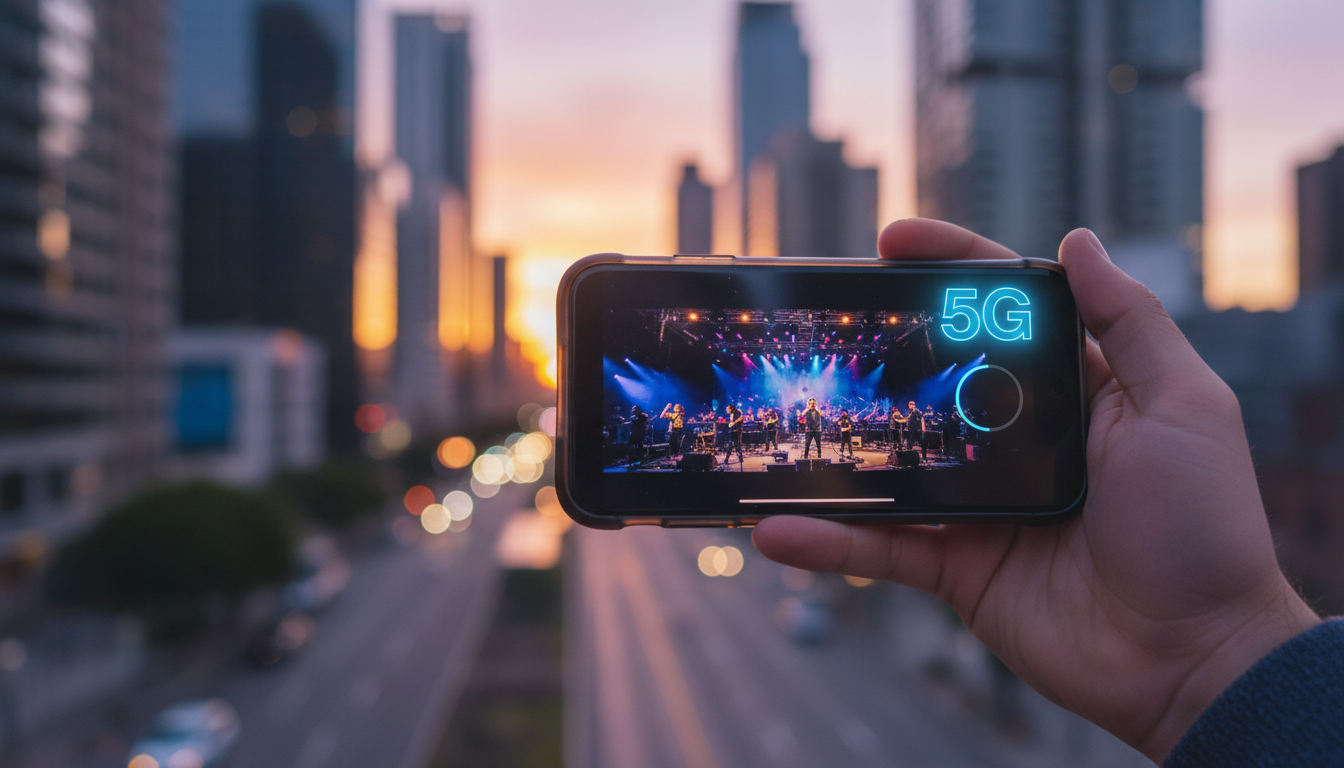
As mobile networks evolve, so does the way audiences consume live TV and on-demand video. How 5G is Revolutionizing Mobile IPTV Streaming in 2026 is not just a marketing tagline — it describes an ecosystem-level transformation that combines radio access improvements, cloud-native architectures, advanced codecs, and AI-driven delivery to make high-quality IPTV on phones and tablets the new norm. This article explains the technical building blocks, real-world user benefits, deployment patterns, and practical recommendations for IPTV providers and engineers.
What 5G brings to mobile IPTV in 2026: the technical foundations
By 2026, 5G has progressed well beyond early deployments. Key capabilities that directly impact mobile IPTV include:
- Enhanced Mobile Broadband (eMBB) — sustained multi-hundred Mbps to Gbps-class throughput in urban and suburban areas thanks to mid-band and mmWave spectrum plus massive MIMO and carrier aggregation.
- Ultra-Reliable Low-Latency Communications (URLLC) — network optimizations and 5G Standalone (SA) cores delivering sub-10 ms user-plane latency in many operational scenarios, enabling near-real-time interactions for live events and low-delay streaming.
- Network Slicing and QoS — logical slices that guarantee bandwidth, priority, and latency for IPTV services, ensuring consistent Quality of Experience (QoE) during peak usage.
- Multi-Access Edge Computing (MEC) — CDN and application logic deployed at the edge to reduce round-trips, accelerate startup, and enable personalized caching and per-user ABR (adaptive bitrate) decisions.
- 5G Broadcast / FeMBMS — 3GPP Release features for multicast/broadcast that are practical for mass live events, lowering radio resource usage and improving scalability for simultaneous viewers.
Together, these features change the dynamics of mobile IPTV. It’s no longer about best-effort mobile video; it’s about predictable, high-fidelity delivery even on congested networks.
Coding, transport, and playback advancements
Streaming stacks have matured to take full advantage of 5G:
- Advanced codecs — AV1 hardware decode is widely available in 2026 phones; VVC (H.266) or optimized HEVC are used for premium 4K streams to reduce bitrate without compromising quality.
- Low-latency packaging — CMAF chunked transfer, Common Media Application Format (CMAF) with low-latency DASH/HLS, and sub-segment delivery provide sub-second chunk boundaries for near-live playout.
- Transport layer improvements — HTTP/3 over QUIC is becoming standard for streaming, reducing connection setup time and eliminating head-of-line blocking compared to TCP-based HTTP/2.
- AI-driven ABR and QoE — machine learning models running at the edge and in-client use historical and real-time telemetry (throughput, RSRP/RSRQ, buffer state) to make smarter bitrate decisions and prefetch content.
How IPTV providers and operators are leveraging 5G
IPTV providers that integrate with 5G effectively are seeing measurable improvements in engagement and cost-efficiency. Typical strategies include:
- Edge CDN integration: Deploying origin and cache nodes inside operator MEC zones to cut latency and reduce backbone transit costs.
- Network-sliced premium tiers: Offering paid plans with guaranteed slice QoS for live sports and premieres—this improves ad viewability and retention.
- Multicast for scale: Using FeMBMS for stadium events and widely-viewed live broadcasts to simultaneously serve thousands of devices without linear increases in unicast bandwidth.
- Device-aware delivery: Detecting hardware codec support and switching to AV1/VVC where possible, falling back to HEVC or AVC when necessary.
For CanzarTV and similar providers, these approaches translate into fewer buffering incidents, faster start times, and the ability to deliver higher-resolution streams (4K mobile in many markets) without proportionally higher delivery costs.
Typical performance improvements seen in 2026
- Startup latency: Reduced from 3–7 seconds to often under 1.5 seconds for cached content on MEC-enabled networks.
- Rebuffering ratio: Decreased by 60–80% in many deployments due to edge caching and smarter ABR.
- Average sustained bitrates: Increased two- to five-fold on mid-to-high band 5G compared with LTE baselines, enabling widescale 1080p and growing 4K delivery.
Technical challenges and considerations in 2026
5G unlocks a lot, but successful mobile IPTV deployment still requires addressing operational complexities:
- mmWave fragility: High throughput mmWave bands deliver great speeds but are sensitive to blockage and mobility; robust measurement-based handover policies and multi-connectivity are essential.
- Device fragmentation: Not all phones support the latest codecs or QUIC stacks; graceful fallbacks and per-device profiling are required.
- Battery and thermal: Sustained high-bitrate decoding and radios can increase power draw; adaptive power-aware profiles and hardware decode are important.
- DRM and security: End-to-end DRM (Widevine, PlayReady, FairPlay) and secured transport over QUIC must be validated across devices and edge nodes.
Best practices for IPTV teams and engineers
To maximize the benefits of 5G for mobile IPTV, implement the following:
- Adopt HTTP/3 and QUIC for lower connection overhead and improved resilience to packet loss.
- Use CMAF chunked delivery and align encoder chunking with ABR logic for smooth low-latency playback.
- Implement edge-first caching with per-region and per-event rules; use predictive caching driven by AI for high-profile content.
- Enable network awareness in clients—leverage 5G radio metrics (when available) and operator signaling to proactively adapt bitrate.
- Provide codec negotiation at session start to use hardware decode paths whenever possible.
- Plan for multicast where supported for large simultaneous audiences to save radio resources and ensure consistent quality.
Looking ahead: what comes after 2026?
5G-Advanced (3GPP Release 18 and beyond), tighter integration with satellite LEO constellations, and continued edge compute proliferation will keep pushing the bar for mobile IPTV. Expect better multicast tooling, standardized QoS APIs between operators and OTT providers, and more ubiquitous hardware support for next-gen codecs — all of which will further improve reliability and efficiency.
How 5G is Revolutionizing Mobile IPTV Streaming in 2026 is both a technological reality and a market opportunity. Providers that combine modern streaming stacks, edge compute, and tight operator partnerships will deliver superior mobile TV experiences that users increasingly expect.
Get started with CanzarTV
If you want to experience these 5G-powered improvements first-hand, consider exploring CanzarTV’s subscription plans. We optimize streams for mobile networks and partner with edge and operator ecosystems to bring faster startup times, reduced buffering, and higher-resolution mobile viewing. Check our subscription plans to find the option that matches your viewing needs and network conditions.

Canzar
Ready to stream? Pick your plan
Live TV, movies, sports and 10,000+ channels on any device — Firestick, Android TV, Smart TV, phone.
View Subscription Plans Compare Pricing
Moderation: Comments are reviewed before publishing. Be respectful and on-topic.
Guidelines: Share streaming tips, device help, or content recommendations. No spam, no promotions, no off-topic links.