
Last updated August 22, 2026 · Editorially reviewed by CanzarTV
Why 2026 is the Year to Finally Cut the Cord for IPTV
After more than a decade of steady migration from traditional pay-TV to streaming, Why 2026 is the Year to Finally Cut the Cord for IPTV is no longer just a prediction — it’s a practical roadmap. Advances in network infrastructure, codecs, delivery protocols, and content licensing have closed the quality and latency gap that once favored cable and satellite. For consumers who value picture quality, reliable live sports, flexible pricing, and modern features like cloud DVR and device interoperability, 2026 is the tipping point to switch to an IPTV-first setup.
Key technological changes that make 2026 the tipping point
Several concrete technical improvements have converged to make IPTV equal or superior to legacy pay-TV in experience and cost-efficiency. Below are the most important developments and why they matter.
Network and transport improvements
- Wider availability of fiber and 5G-Advanced: Greater FTTP and upgraded 5G networks reduce last-mile congestion, increase bandwidth, and improve consistency for streaming.
- HTTP/3 and QUIC: Faster connection establishment, improved loss recovery, and better performance on mobile and lossy networks — meaning quicker channel changes and fewer stalls.
- Edge/Regional CDNs and serverless streaming: Content cached closer to viewers reduces round-trip latency and improves startup time for live and VOD content.
Codec and encoding gains
- Widespread AV1 (and selective VVC/H.266) hardware decode: Efficient delivery of 4K HDR at substantially lower bitrates compared to older codecs. That translates to stable 4K streaming on consumer connections previously considered marginal.
- Dynamic bitrate ladders and per-title encoding: Automated encoding that optimizes quality and bandwidth for each title reduces viewer buffering while lowering delivery costs.
Low-latency and quality-of-experience (QoE)
- LL-HLS, low-latency DASH, and WebRTC adoption: Live sports and interactive events now stream with sub-2–3 second latencies in many setups, eliminating a core advantage of traditional broadcast.
- Server-Side Ad Insertion (SSAI) and targeted DAI: Seamless ad experiences with fewer disruptions and better monetization that keeps subscription costs competitive.
Security and device support
- Unified DRM support (Widevine, PlayReady, FairPlay): Secure playback across Android, iOS, Smart TVs, and set-top boxes without hacks or workarounds.
- Cross-platform apps and standards (CMAF, HLS, DASH): Broad device compatibility so consumers can use existing smart TVs, streaming sticks, or mobile devices.
Consumer benefits you’ll notice immediately
Cord-cutting in 2026 doesn’t mean compromise. It means different, and in most cases better:
- Lower ongoing costs: Flexible, a la carte plans and bundled OTT/IPTV options let you pay for what you watch.
- Superior picture and audio: 4K HDR, Dolby Vision, and Dolby Atmos are widely supported; adaptive streaming provides consistently high visual fidelity.
- Improved live event experience: Near-broadcast latency, multi-angle/multi-sport viewing, and instant replays are standard for many providers.
- Modern UX: Personalized recommendations powered by AI, synced watchlists across devices, and cloud DVR make the experience more convenient than legacy DVRs.
What technical metrics to check before you cut the cord
Not all IPTV services are equal. Here are the objective metrics and features to evaluate so your new setup outperforms your old one.
Performance metrics
- Startup time: Aim for under 3 seconds for VOD and under 5 seconds for live channels on a typical home broadband connection.
- Average bitrate and rebuffering ratio: Look for providers that publish rebuffering rates and have ABR optimization — fewer than 1% rebuffering is a good benchmark.
- Live latency: For sports fans, target single-digit latency (ideally 2–6 seconds) for key events.
Feature and compatibility checklist
- Native apps for major platforms (Android TV/Google TV, Roku, Apple TV, Fire TV, web browsers, iOS/Android)
- Support for HDR formats and multi-channel audio (Dolby Atmos)
- Robust DRM and secure playback
- Cloud DVR with recording retention options and simultaneous streams
- Offline downloads and household profiles
How IPTV providers (and CanzarTV) deliver on these advances
Leading IPTV providers have updated architectures to make the most of these technologies. At CanzarTV, we architect streaming with three core principles in mind: reliability, quality, and flexibility.
- Cloud-native delivery: Scalable microservices and containerized edge logic reduce failures during peak events.
- Advanced codec support: AV1-first encoding for VOD and adaptive live profiles that fall back to HEVC/H.264 to maximize device compatibility.
- Low-latency live stack: LL-HLS/DASH and WebRTC where sub-second interaction is required (e.g., betting overlays, live auctions).
- Comprehensive DRM and secure tokenization: Streamlined access and content protection across devices.
- QoE telemetry and proactive troubleshooting: Real-time monitoring and automated remediation to minimize viewer impact.
Practical tips for a smooth transition
Cutting the cord is simple when you prepare correctly. Follow these practical steps to ensure the best experience:
- Test your network: If you plan to stream 4K HDR, aim for sustained bandwidth of 15–25 Mbps. With AV1 encoding, 10–15 Mbps may be sufficient in many cases.
- Prefer wired connections for critical live events: Ethernet avoids Wi-Fi variability during sports or premieres.
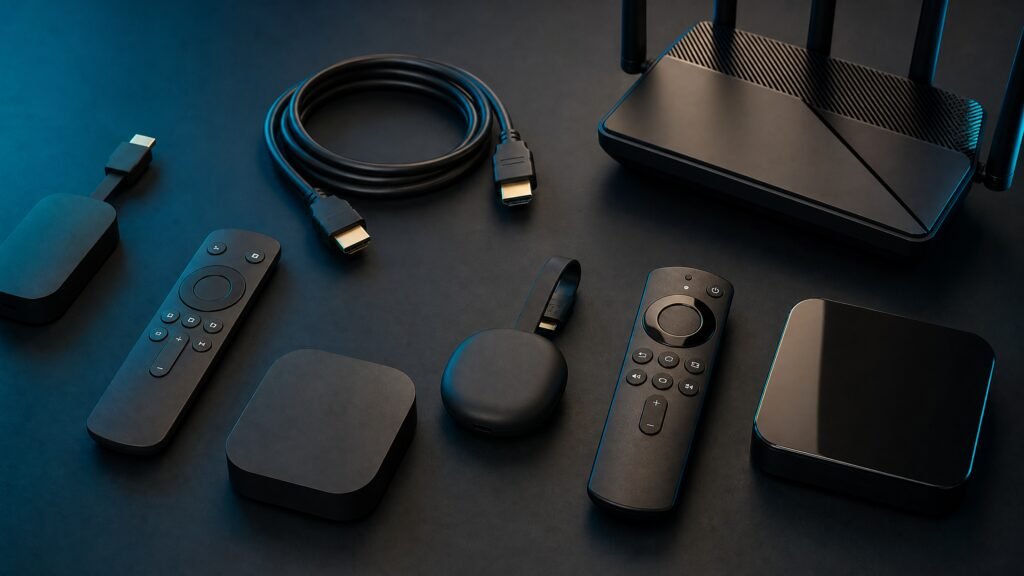
- Choose compatible hardware: Use modern Smart TV OS, a capable streaming stick, or a set-top device that supports AV1 hardware decode where possible.
- Evaluate trial periods: Use free trials to assess startup time, latency, and picture quality during peak hours.
Conclusion
Why 2026 is the Year to Finally Cut the Cord for IPTV boils down to one clear fact: the underlying technology stack has matured. Faster networks, smarter CDNs, efficient codecs, and robust DRM make IPTV a better value and often a better experience than legacy pay-TV. Whether your priority is live sports latency, 4K HDR quality, or flexible pricing and device compatibility, this year gives you the technical foundation to make the switch with confidence.
If you’re ready to experience modern IPTV with professional-grade streaming and customer-focused plans, please consider checking CanzarTV’s subscription plans. We offer a range of packages, advanced streaming features, and a risk-free trial so you can evaluate performance in your home before committing.
Explore CanzarTV’s subscription plans today and see why 2026 is the year to finally cut the cord.

Canzar
Ready to stream? Pick your plan
Live TV, movies, sports and 10,000+ channels on any device — Firestick, Android TV, Smart TV, phone.
View Subscription Plans Compare Pricing
Moderation: Comments are reviewed before publishing. Be respectful and on-topic.
Guidelines: Share streaming tips, device help, or content recommendations. No spam, no promotions, no off-topic links.